How it works
Traditional causal market research is slow and expensive because recruiting humans is slow and expensive. Subconscious.ai replaces the recruited panel with simulated respondents, and keeps the experimental design and statistics unchanged.
The four parts
Synthetic respondents. AI-generated respondent profiles, built to be demographically representative rather than convenient. Because the population is constructed rather than recruited, it does not suffer from self-selection bias or oversampling of whoever answers surveys.
Causal experimental design. Every study is a randomised discrete choice experiment. Randomisation is what licenses causal claims: attributes vary independently of one another, so an effect can be attributed to the attribute rather than to what it correlates with.

Correlational work can rule things in. Only a randomised design rules things out.
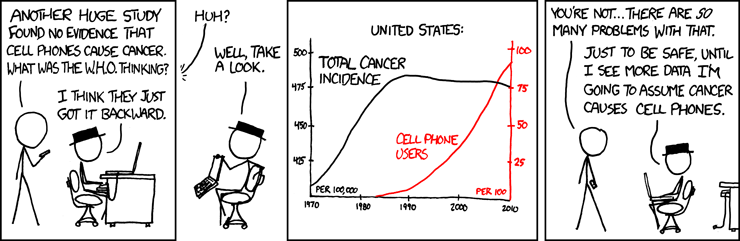
xkcd 925, Randall Munroe, CC BY-NC 2.5.
Interactive design. You supply a question; the platform proposes attributes, levels, and respondent instructions, and you correct them before running.
Automation. Design, execution, and analysis run without a human in the loop, which is where the cost and time reduction comes from.
What is genuinely different
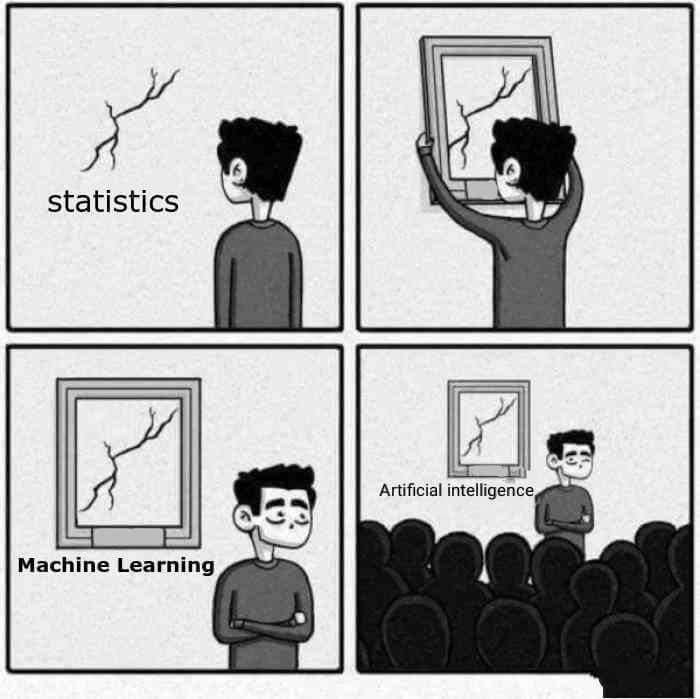
The claim is not that a language model can guess what people want. It is that a well-specified experiment run against a representative simulated population reproduces the effects measured in human studies: a claim that is testable, and tested. See Human baselines.
What it is not
- Not a survey tool. There is no recruiting, no fielding, no incentives.
- Not a forecast. It measures relative preference within the design you gave it.
- Not a replacement for talking to customers. It answers "which of these moves the decision", not "what should we build".